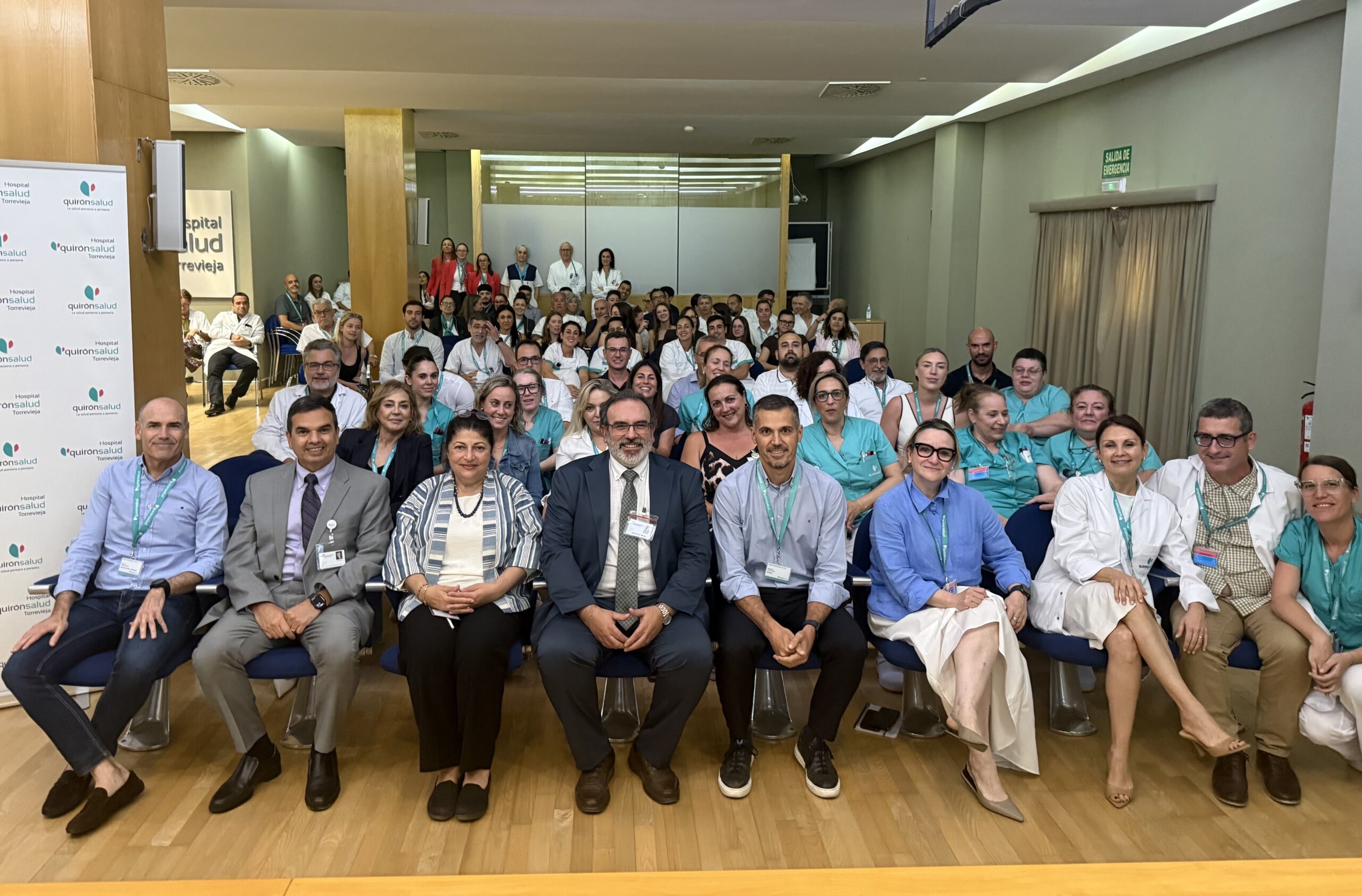
With this renewed accreditation, Quirónsalud Torrevieja Hospital further strengthens its position as a benchmark for excellence in patient care.
Torrevieja, 29 June 2026 – Quirónsalud Torrevieja Hospital has successfully renewed its Joint Commission International (JCI) Gold Seal, the world’s most prestigious and demanding healthcare accreditation, recognising excellence in clinical care, patient safety and the organisation’s ongoing commitment to continuous improvement.
This renewal is particularly significant as it follows the successful completion of the audit based on the 8th Edition of the JCI Accreditation Standards, a considerably broader and more rigorous assessment framework than previous editions. During the survey, JCI auditors evaluated more than 1,500 quality standards covering every aspect of the hospital’s operations, including clinical care, organisational processes, digital transformation and sustainability.
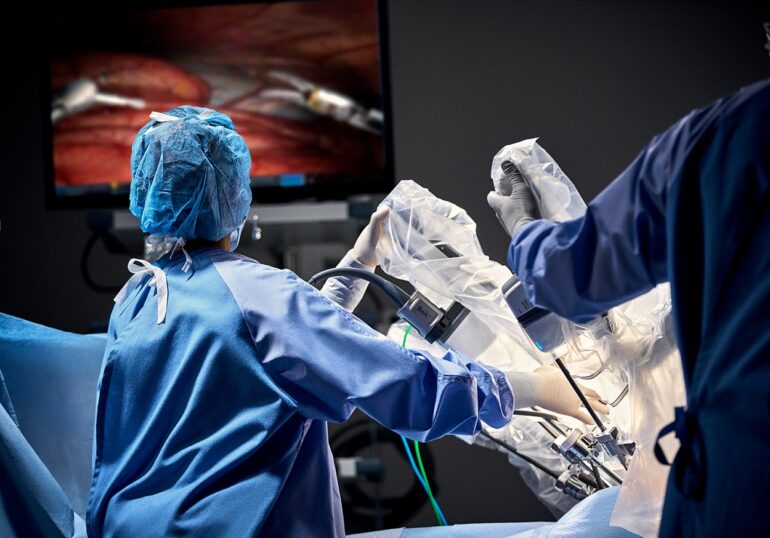
Among the hospital’s greatest strengths, the survey team highlighted the implementation of advanced digital technologies that enhance diagnostic accuracy and patient follow-up, together with the organisation’s energy efficiency initiatives and responsible resource management policies.
With this renewed accreditation, Quirónsalud Torrevieja Hospital consolidates its position as a leading provider of high-quality healthcare. It is also the first Quirónsalud hospital in the Valencian Community to achieve this internationally recognised distinction, having first obtained JCI accreditation in 2023.
An assessment focused on patient safety
Joint Commission International accreditation is regarded as the global benchmark for evaluating healthcare quality. Its rigorous methodology assesses whether every hospital process is designed to deliver safe, efficient and continuously improving patient care.
The survey assessed, among other aspects, compliance with the International Patient Safety Goals (IPSGs) established by the World Health Organization (WHO), including accurate patient identification, effective communication between healthcare professionals, safe medication management, prevention of healthcare-associated infections, and the reduction of risks related to surgical procedures.
The evaluation also confirmed Quirónsalud Torrevieja Hospital’s position as a centre of excellence, recognised for delivering high-quality, comprehensive care across both inpatient and outpatient services. This achievement is supported by the hospital’s sustained growth in clinical activity and the continuous expansion of its portfolio of specialised healthcare services.
A culture of excellence shared across the entire organisation
The reaccreditation recognises the commitment of every professional at Quirónsalud Torrevieja Hospital to embedding a genuine culture of safety throughout the organisation. This strategy involves both clinical and non-clinical teams in the ongoing definition, review and continuous improvement of processes, all with a shared objective: delivering ever safer, higher-quality care.
The survey team particularly praised the hospital’s excellence in medical care, the outstanding expertise of its professionals, and the organisation’s unwavering commitment to innovation, continuous improvement and patient safety.
Joint Commission International accreditation must be renewed every three years through a comprehensive reassessment against internationally recognised standards comparable to those applied by the world’s leading hospitals. This process encourages accredited organisations to maintain an ongoing commitment to excellence and continuous development.
What is Joint Commission International?
Joint Commission International (JCI) is an independent, not-for-profit organisation that has been working in more than 100 countries since the 1990s to improve healthcare quality and patient safety. Its accreditation is widely recognised as the gold standard in international healthcare, reflecting the exceptional rigour of its evaluation process, which comprehensively assesses every aspect of patient care and hospital management.
Nine Quirónsalud hospitals accredited by Joint Commission International
In 2022, the Quirónsalud Group was awarded the Joint Commission International Enterprise Accreditation, which it successfully renewed in 2025 as part of the mandatory three-year reaccreditation cycle. This prestigious international recognition reflects Quirónsalud’s commitment to continuously improving quality across its entire hospital network while providing patients with the safest possible healthcare environment. It also demonstrates a quality management culture focused on risk reduction and on delivering the very best patient experience.
During the original Enterprise Accreditation survey, the JCI survey team identified the robustness of Quirónsalud’s management model, the excellence of its clinical care, the outstanding expertise of its professionals, and the organisation’s strong culture of enthusiasm and continuous improvement as key distinguishing features.
During the most recent reassessment, the auditors highlighted the maturity of the Group’s management system, its effective use of data, strong governance and leadership, strategic alignment, and its ability to successfully implement best practices consistently across all hospitals within the Group.
Nine Quirónsalud hospitals now hold Joint Commission International accreditation:
- Fundación Jiménez Díaz University Hospital (Madrid)
- Quirónsalud Pozuelo University Hospital (Madrid)
- La Luz University Hospital (Madrid)
- Centro Médico Teknon (Barcelona)
- Quirónsalud Barcelona Hospital
- Dexeus University Hospital (Barcelona)
- Quirónsalud Córdoba Hospital
- Quirónsalud Torrevieja Hospital
- Clínica Imbanaco (Cali, Colombia)
This reaccreditation further reinforces Quirónsalud’s commitment to clinical excellence through a continuous improvement management model based on the systematic measurement of quality indicators and the achievement of clearly defined improvement objectives involving every level of the organisation.
At the same time, the Group continues to drive an ambitious digital transformation strategy aimed at improving operational efficiency, reducing administrative burdens for healthcare professionals and enabling them to devote more time to personalised patient care. Sustainability also remains a fundamental pillar of its strategy, promoting responsible practices that contribute to a safer, more efficient and environmentally responsible healthcare system.
Quirónsalud in the Valencian Community and the Region of Murcia
Quirónsalud operates an extensive network of hospitals and healthcare centres across the Valencian Community and the Region of Murcia, forming one of the leading private healthcare groups in the region, where people remain at the heart of everything it does.
The Group is recognised as a leader in private healthcare across both regions, offering state-of-the-art medical technology alongside outstanding facilities and services for both patients and healthcare professionals.
About Quirónsalud
Quirónsalud is Spain’s leading healthcare provider and, together with its parent company Fresenius Helios, also Europe’s largest private hospital group. In addition to its operations in Spain, Quirónsalud has a significant presence throughout Latin America.
The Group employs more than 50,000 professionals across over 180 healthcare facilities, including 57 hospitals with more than 8,000 inpatient beds. It combines cutting-edge medical technology with highly specialised healthcare professionals of internationally recognised expertise.
Its network includes some of Spain’s most prestigious hospitals, such as Fundación Jiménez Díaz University Hospital, Centro Médico Teknon, Ruber Internacional Hospital, Quirónsalud Pozuelo University Hospital,Quirónsalud Barcelona Hospital, Dexeus University Hospital, Policlínica Gipuzkoa, Hospital Universitari General de Catalunya, and Quirónsalud Sagrado Corazón Hospital, among many others.
The Group is strongly committed to medical education—eleven of its hospitals are university teaching hospitals—and to biomedical research through institutions such as the Fundación Jiménez Díaz Health Research Institute, accredited by Spain’s Ministry of Science and Innovation.
Its healthcare model is organised around multidisciplinary clinical units and cross-hospital networks, enabling expertise to be shared across the organisation and facilitating the rapid translation of research into clinical practice.
Quirónsalud is currently leading numerous research projects throughout Spain, with many of its hospitals recognised as pioneers in specialties including oncology, cardiology, endocrinology, gynaecology and neurology.



 play_arrow